Notes from Becoming A Documentary Photographer.
I didn't expect all this magic to occur! One day I was a photographer that got into the business of photography to support the cost of my equipment as a hobbyist who loved capturing nature and the stories it shared w/me —> to a photographer who documents stories at the intersection of environment, culture and people. None of this would have happened if I hadn't started walking the path of the photographer I wanted to become.
I stepped into the world of documentary photography after a stressful night in my parents' garage studying for an engineering exam. To take a break, I picked up a magazine from National Geography that came in the mail and I read an article about Alzheimer and it stunned me that individuals with this disease cannot recall the simplest memories. And I thought to myself: if they saw photos from their past, maybe that will trigger their memory. This was the moment that started my journey as a photographer.
Almost 10 years later, after years of fighting imposter syndrome and wondering whether I was the photographer I wanted to be, I can now confidently say I'm a documentary photographer w/o hesitation, by walking the path. I was able to do so by learning more about who I am and what I cared about. This time last year I was focused on event/wedding photography which I enjoyed — documenting memories... My favorite was a 50th wedding anniversary and a wedding because the emotions at the events were so pure/true and heavy it made me want to tear up.
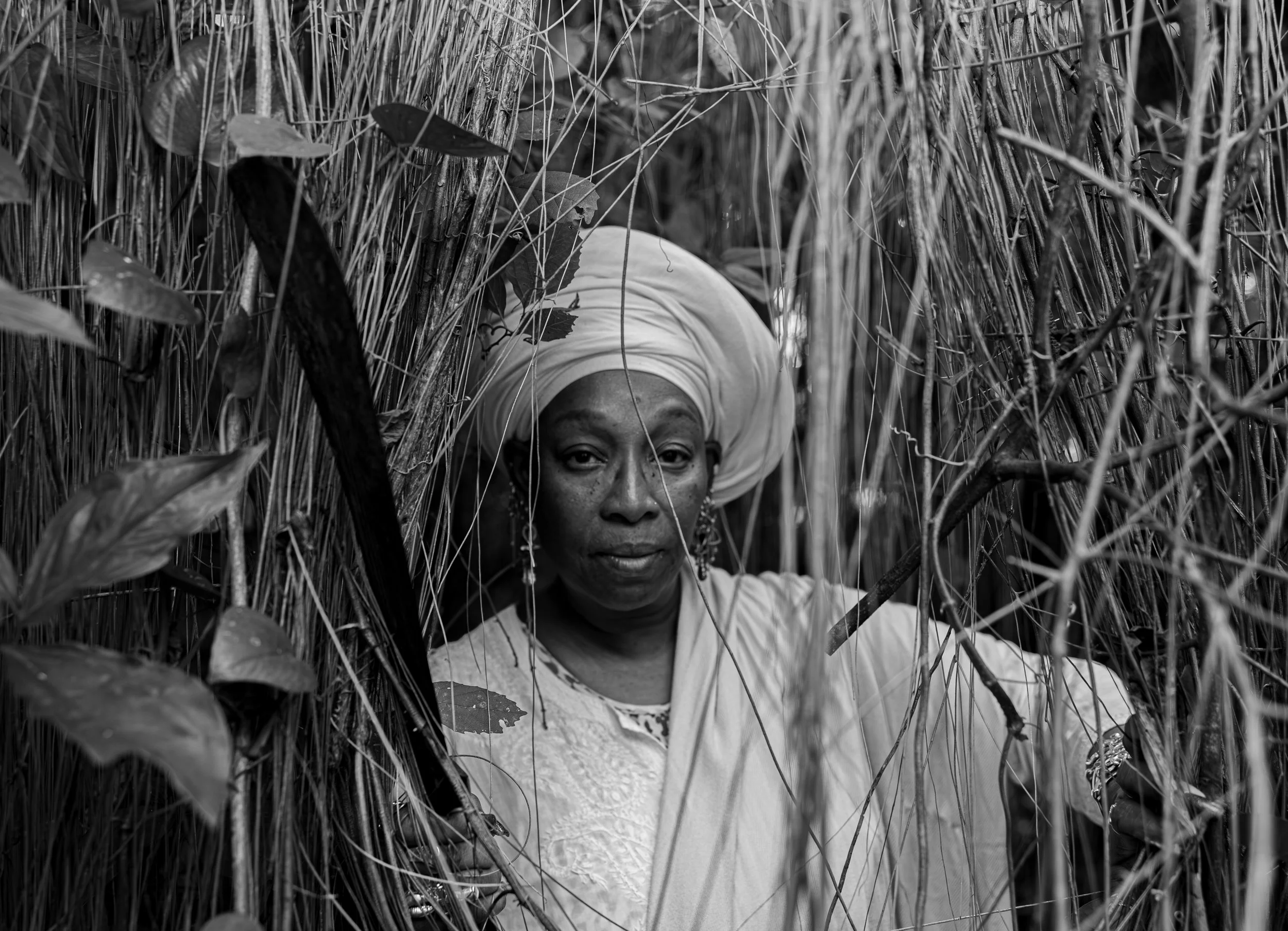
Dr. Chenzira Davis-Kahina in Maroon Sanctuary Territorial Park in St. Croix, US Virgin Islands. | Shot by Jhanielle Brown
But where my heart was truly was documenting things that I cared about and that was culture, environment and people. I was able to do that as the lead photographer & Director of Visual Storytelling for the Black Heritage Trees Project, which is mapping + documenting + conserving black heritage trees within the Black Diaspora. I was becoming the explorer I truly wanted to be; I was driving around the island of St. Croix searching for heritage trees and meeting w/ local community members including historians, archeologists, etc. That was truly when everything set into me understanding what makes me tick! I was seeing hidden realities that people don't get to see and will never be able to due to the sensitivity and privacy of these items.
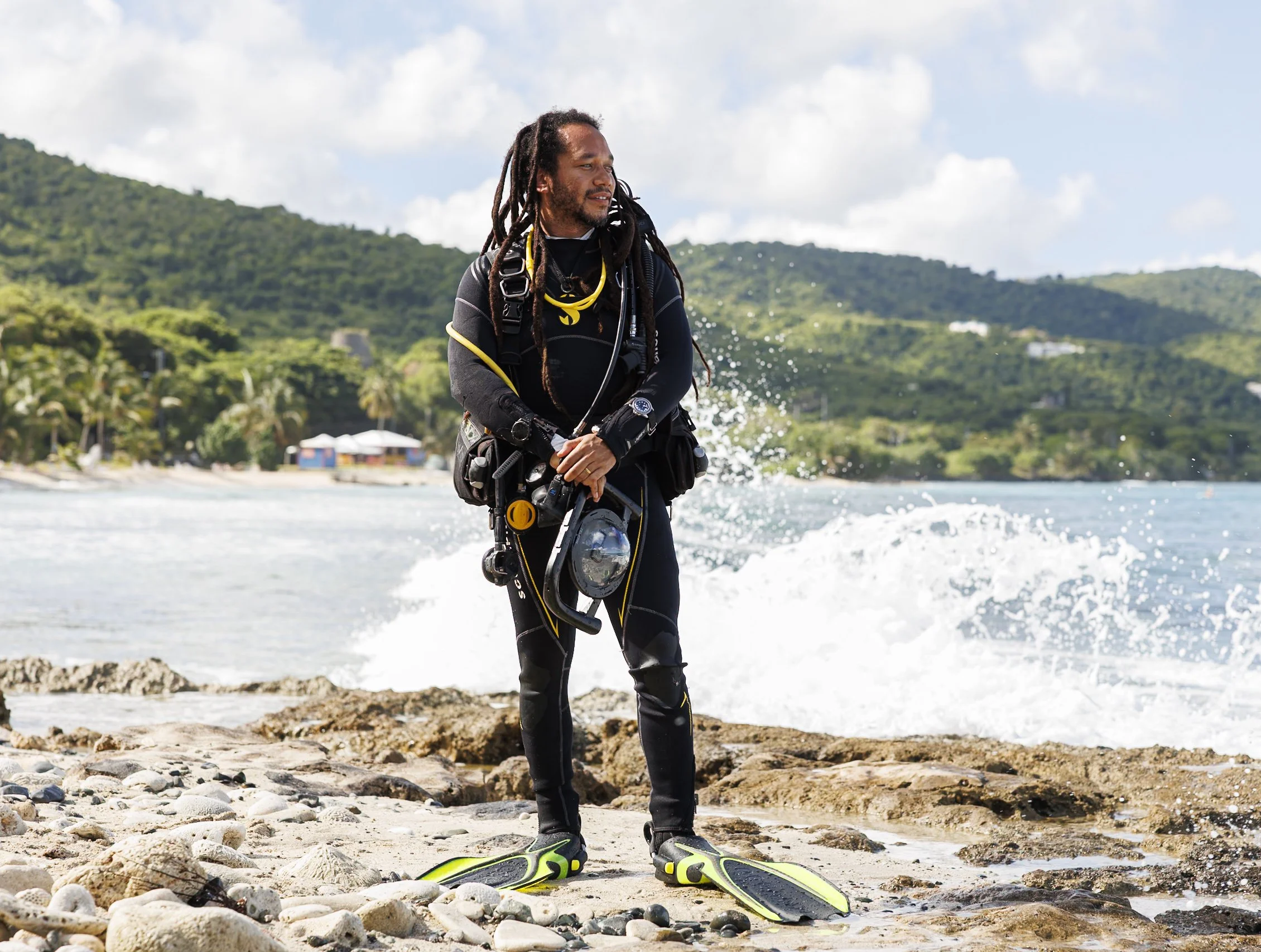
Dr. Justin Dunnavant stands along the shoreline at Cane Bay in St. Croix, U.S. Virgin Islands. | Shot by Jhanielle Brown for National Geographic
Life didn't bring just that magic! The next magical moment was when NG asked me to document their Explorer(s). I couldn't believe it. It was literally a full circle moment. Me, literally me! I was meeting individuals that I'd never imagine or think I'd interact with. I just want to… well, feel like I want to cry about this magic. I hiked paths that the Maroons of the US Virgin Islands built their lives with historians and ecologists that are preserving the Maroon Sanctuary Territorial Park.
In addition to archeologist using coral to explore and document slave ocean history! Like, what, who am I? This is all magic. And I'm continuing to harness this magic from these once-in-a-lifetime experiences to push myself beyond measures w/ limits of course — to lead and explore my own projects focused on as well at the intersection of culture, environment, and people with:
Growing Home: Where Memory Takes Root: Series about women of color and their gardens: the memory, the labor, and the love that lives in the soil.
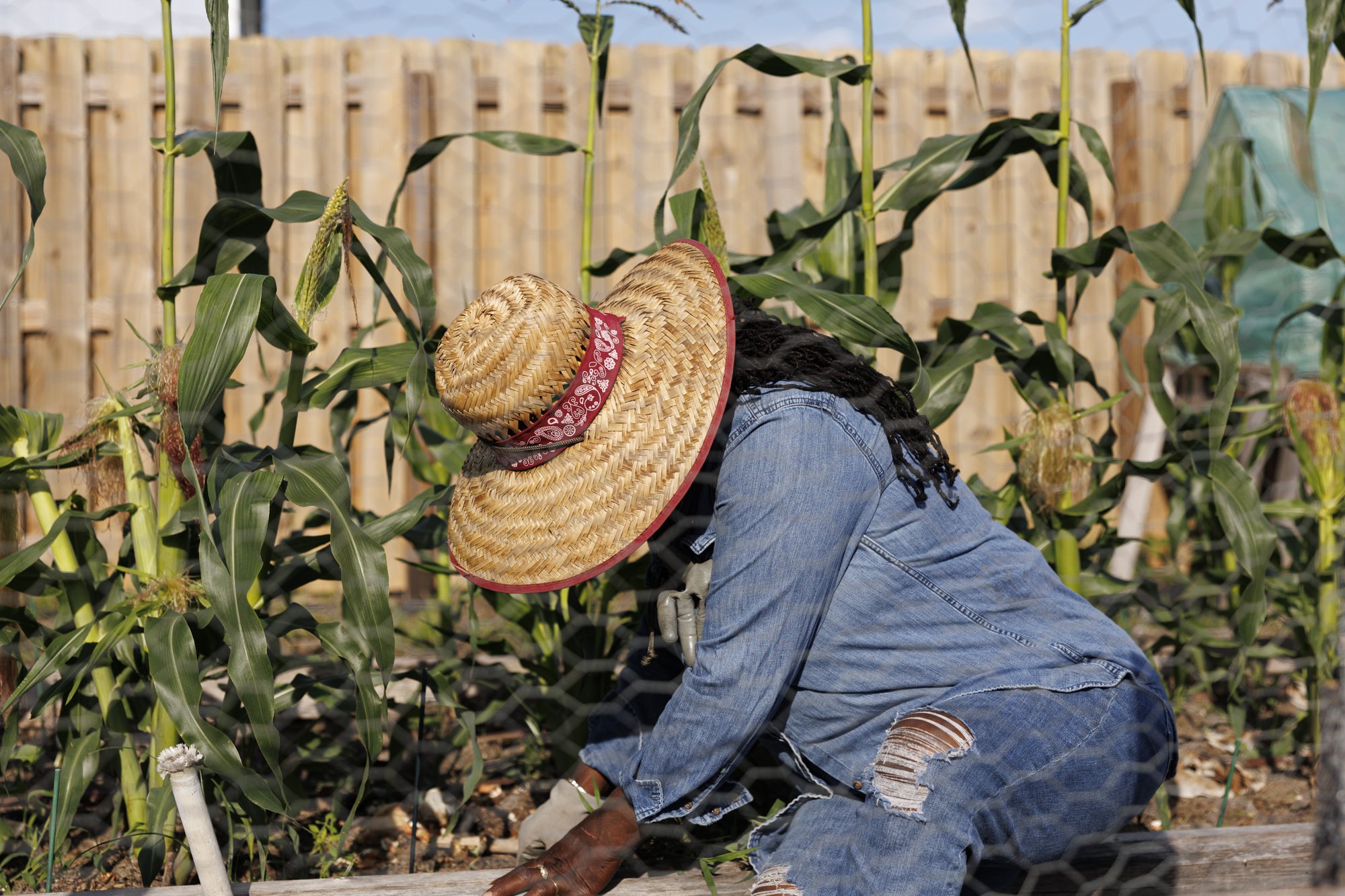
Juliet B. in her garden in North Florida for Growing Home: Where Memory Takes Root Projects | Shot by Jhanielle Brown
I'm happy that the engineering student sitting in his parents' garage reading National Geographic had no idea where that moment would lead. Years later, I've worked on projects sponsored by them and received my first assignment from them. Not because I had some grand plan, but because I followed the stories that interested me, discovered what made me tick, and kept walking the path of the explorer I wanted to become.